
Lascivia Triumphet
Lascivia Triumphet is the 2026 demo EP by Eylger, a four-part cycle of Latin invocations inspired by In Nomine Inferno Tuo, O Satanas. Although framed as a prayer, the work is not Satanic; it uses the figure of Satan as a symbol of rebellion against religious dogma, moral narrowness, and humanity’s estrangement from nature. Rooted in the radical spirit of Sade, Baudelaire, Lautréamont, and the poètes maudits, the EP embraces their philosophies of intellectual freedom, sensual honesty, and resistance to imposed virtue. Lascivia Triumphet stands as a dark, defiant hymn—an indictment of hypocrisy, a call to reclaim instinct and earth, and a tribute to the outcast writers who challenged the moral order of their time.
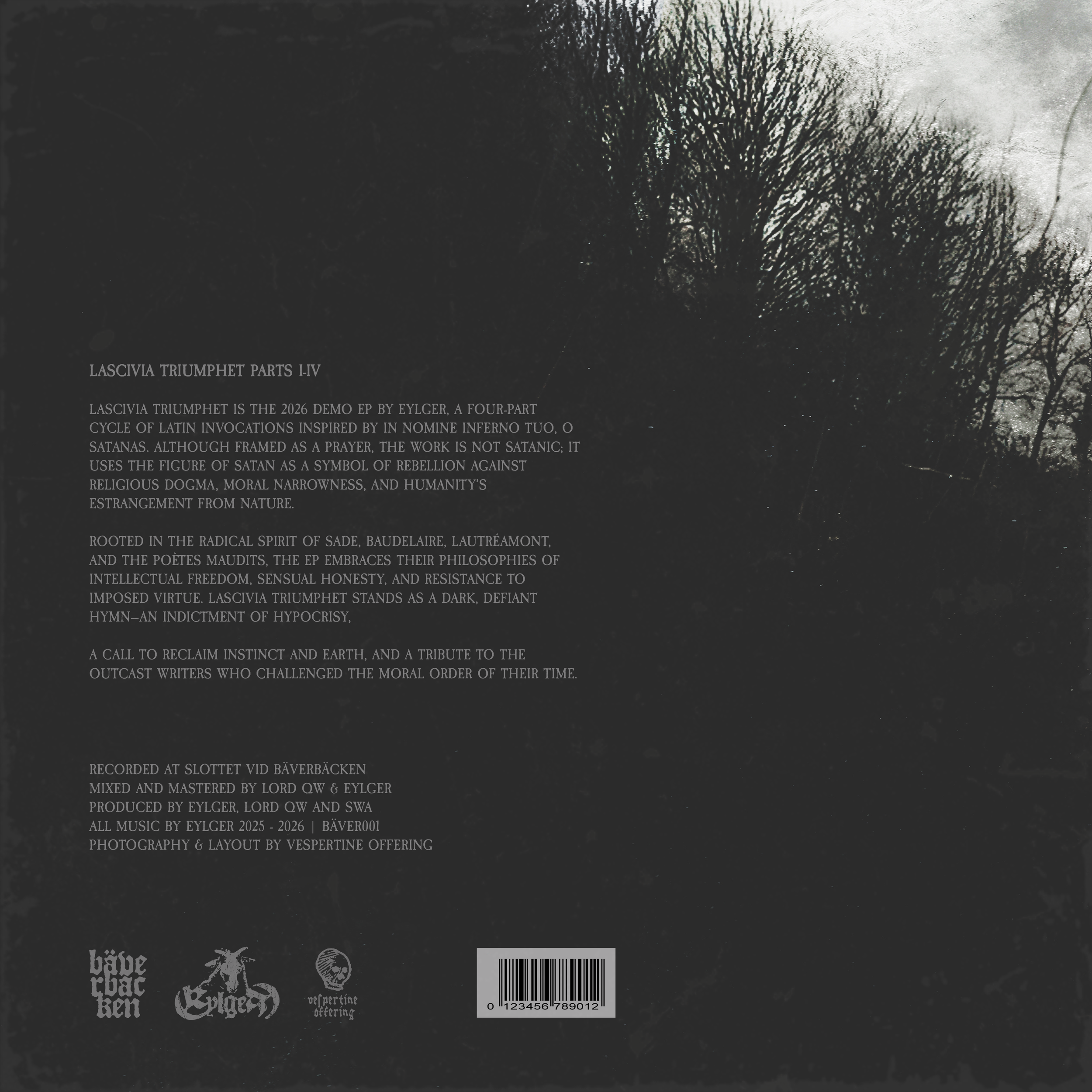
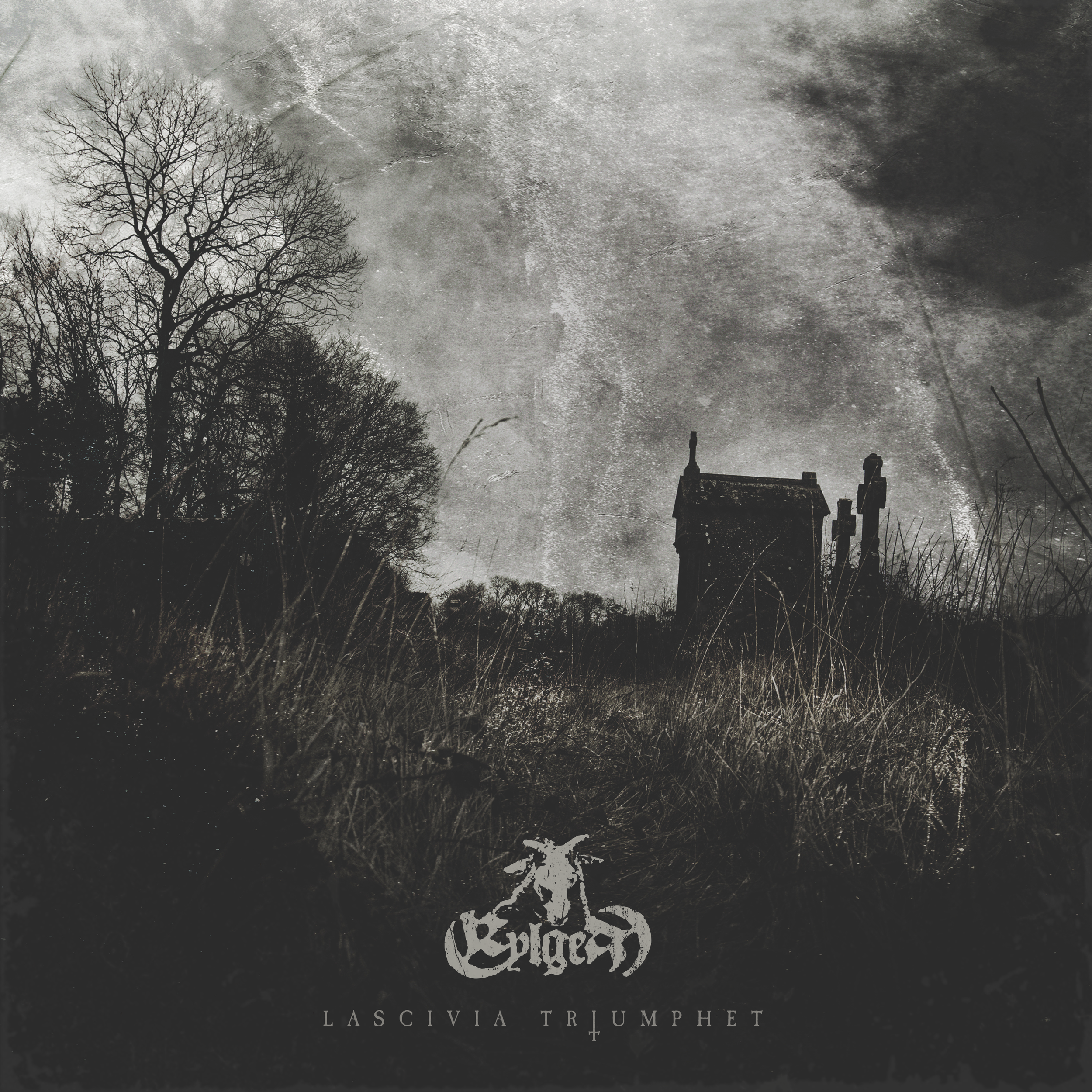
Lascivia Triumphet is the 2026 demo EP by Eylger, a four-part work built around a sequence of devotional invocations in Latin—an imagined liturgy titled In Nomine Inferno Tuo, O Satanas. Although the language borrows the structure of prayer, Eylger is not a Satanic band. Instead, the prayer serves as an act of defiance: a symbolic complaint against dogmatic religion, moral narrowness, and the ongoing human alienation from the natural world.
In Lascivia Triumphet, Satan becomes a metaphor—an emblem of rebellion, liberation, and the refusal to bow to systems that distort compassion, suppress desire, or claim dominion over nature. The invocations challenge:
• Religious hypocrisy, where virtue and cruelty often intertwine;
• The repression of the body and instinct, historically condemned as “sin”;
• Human arrogance toward the earth, expressed through exploitation, pollution, and the delusion of dominion rather than coexistence.

Eylger’s ideological stance follows a long lineage of radical thinkers and écrivains maudits. Writers such as Marquis de Sade, Charles Baudelaire, Comte de Lautréamont, and the broader tradition of the poètes maudits saw transgression not as mere provocation, but as a necessary force for revealing truth. Their works championed intellectual freedom, sensual honesty, and a refusal to submit to rigid moral codes imposed by church or state.
Philosophically, Lascivia Triumphet echoes:
• Sade’s critique of institutional virtue, exposing how systems of morality often mask domination;
• Baudelaire’s exaltation of beauty in darkness, finding the sacred not in purity but in the raw, forbidden, and imperfect;
• Lautréamont’s surreal, violent, rebellious imagery, rejecting the constraints of polite society;
• The poètes maudits’ devotion to authenticity, even at the cost of exile or condemnation.
The EP channels these traditions into a contemporary ritual of sound. The Latin prayers do not praise a literal Satan—they celebrate the triumph of desire, doubt, and free thought over silence and obedience. They call for a return to reverence for the natural world, not through piety, but through humility, sensuality, and an acknowledgment of humanity’s place within rather than above it.
Lascivia Triumphet is thus both protest and celebration: a hymn for those who reject imposed dogma, a lament for a world estranged from nature, and a tribute to the visionary outcasts who dared to write against the grain of their century.